

By: Dr. Huseyn Zakaria
Introduction
All praise is due to Allah, the Lord of all worlds, and may peace and blessings be upon the noblest of Messengers, our master Muhammad, his family, and his companions.
This very short note is an outcome of a phone discussion I had with a high ranking military officer and an elderly uncle, who also is a retired military General, but very active and agile personality all on the ruling of wiping on khuff and or socks in Sunnah that is taken for granted by many young scholars and their followership. I insisted as usual whenever I respond to any religious questions, most especially pertaining to ibādah, to follow the foot steps of our predecessors (Imams Abu Hanifah, Malik bin Anas, Shafi’i and Ahmad bin Hambal) of the best centuries of Islam, rather than the opinions and views of our present scholars. However, if my opinion was not wholeheartedly accepted, I keep my peace as I have done what is right. Consequently, I resolved to share my findings with you and all my Muslim brothers around theworld. Please, read my stand on wiping on khuffs, socks or jarmūqs in Islam.
Among the matters that occupied the attention of the jurists throughout the centuries, indeed, is the issue of wiping over the khuffayn (leather footwear) and the jawrabayn or jarmūqs (socks), as it relates directly to the daily ritual purification (wuḍū’), which is a prerequisite for prayer.
Numerous authentic and mass-transmitted (mutawātir) reports have affirmed the permissibility of wiping over the khuffayn, and this practice was well established among the Companions and the early generations without any differences. It therefore, became one of the well-known and firmly grounded rulings in Islamic jurisprudence.
However, the jurists differed concerning the extension of this ruling to include socks (jawrabayn or jarmūqs), whether they may take the same ruling as the khuffayn, and under what conditions. These variations reveal the richness and diversity of Islamic legal reasoning.
This study, however, aims to present a clear and evidence-based analysis of the subject, grounded in the Qur’ān, authentic Sunnah, and the classical works of the four Sunni schools of jurisprudence: Imamas Ḥanafī, Mālikī, Shāfiʿī, and Ḥanbalī, may Allah have mercy upon them.
Linguistic Definitions:
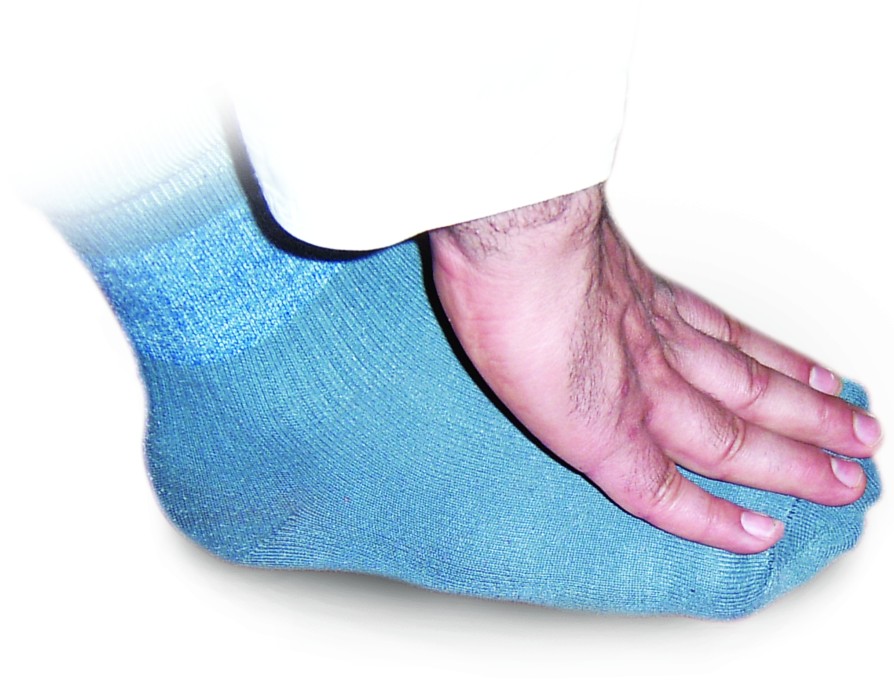
At this juncture, I find it necessary to agree on what we talking about. Thus, the effort to define the real articles of the subject matter. Khuff (الخف), in Arabic, is defined as a form of leather footwear that covers the foot up to the ankles, made to facilitate walking and protect the foot from harm. That is to say, Khuff are footwear made from pure leather or equivalent, covering the feet including the ankles, stronger and more protective than socks.
Jawrab or Jarmūqs are garments worn on the feet, made from wool, cotton, linen, or similar materials.They are usually lighter than khuffs and may be thin or thick.
Differences Between Socks and Khuff
Jaurab/ Jarmūqs Material:
Khuff is made of leather or equivalent. It is firm on the foot, protective and long lasting. It may be thin or semi-transparent, Impermeable, covers foot and ankles. It was prevalent and widespread in olden times, and very common in the time of the Companions.
Jaurab/ Jarmūq is made of wool, cotton, linen, and is generally light and less durable.
Ibn Manẓūr states in Lisān al-ʿArab: “The khuff is made of leather and worn on the feet; it covers them up to the ankles.” while the Jawrab (الجورب) refers to a foot covering made of wool, cotton, or other non-leather materials.
Al-Fayrūzābādī, in al-Qāmūs al-Muḥīṭ, defines it as “a cloth covering for the foot, used like the khuff for protection.”
To summarize, the khuff is traditionally leather, while the jawrab is made of other materials, and the central question in jurisprudence is whether the ruling of wiping applies equally to both.
The Qur’ānic and Theological Foundation:
The foundation of the discussion lies in the verse of Sūrat al-Mā’idah (5:6):
“O you who believe! When you rise for prayer, wash your faces and your hands up to the elbows, and wipe your heads, and wash your feet up to the ankles…”
The phrase “and your feet to the ankles” has two canonical readings: wa arjulakum (accusative, implying washing) and wa arjulikum (genitive, implying wiping of which the Shi’ites sect has chosen the later opinion.
But, early exegetes, including Ibn ʿAbbās and al-Ḥasan al-Baṣrī, explained that the verse commands washing the feet except when they are covered by the khuffayn, in which case wiping is permitted, as clarified by the Sunnah.
This demonstrates the complementarity between Qur’ān and Ḥadīth, showing that the Prophet ﷺ provided the practical specification: washing in general, and wiping when wearing the khuffayn.
Thus, from a theological perspective, this represents the principle of mercy and ease (raḥmah and yusr) in the Sharīʿah; facilitating purity during travel, cold weather, or hardship, and war without compromising cleanliness or ritual precision.
Prophetic Evidence:
Authentic ḥadīths regarding wiping over the khuffayn are mutawātir (mass-transmitted). Imām Aḥmad said: “There is no doubt in my heart about the permissibility of wiping over the khuffayn, for forty Companions narrated it from the Prophet ﷺ.”
Among them:
a. ʿAlī ibn Abī Ṭālib reported: “Had the religion been based on opinion, the underside of the khuff would have been more deserving of wiping than the top. Yet I saw the Messenger of Allah ﷺ wiping over the top of his khuffayn.” (Abū Dāwūd, 162).
b. Al-Mughīrah ibn Shuʿbah narrated: “The Prophet ﷺ performed ablution and wiped over his khuffayn.” (Al-Bukhārī, 206; Muslim, 274).
As for wiping over socks (jawrabayn), all the reports are weak or disputed. The most cited is from al-Mughīrah: “The Prophet ﷺ wiped over his socks and sandals.” (Reported by Abū Dāwūd and al-Tirmidhī).
However, scholars such as al-Bayhaqī and Ibn Ḥajar classified it as weak, due to inconsistencies in the chain (ʿAbd al-Raḥmān ibn Mahdī said: “This ḥadīth is not firm”).
Let me for the purpose of establishing my points home, bring forth some popular Hadiths that are inherently weak on wiping over socks (jawrabayn and Jarmūqs).
Weak Ḥadīths on Wiping over Socks (Jawrab and Jarmūqs)
1. Ḥadīth of Al-Mughīrah ibn Shuʿbah رضي الله عن, said, “The Prophet ﷺ performed ablution and wiped over his socks (jawrabayn) and sandals (naʿlayn).” Narrated by al-Tirmidhī (no. 99), Abū Dāwūd (no. 159), and Ibn Mājah (no. 559). Imām al-Tirmidhī said: “This ḥadīth is ḥasan ṣaḥīḥ.” However, most Hllladīth scholars disagreed with him.
The following Hadiths will be accompanied by scholarly comments on thier weaknesses, accordingly:
Imām Aḥmad ibn Ḥanbal said, there is “No authentic ḥadīth can be relied upon regarding wiping over socks.” (ʿIlal wa Maʿrifat al-Rijāl, 1/445).
In fact, Imām al-Bukhārī said, “The ḥadīth of al-Mughīrah is not authentic in this matter.” (al-Tārīkh al-Kabīr, 1/413). Also, Al-Bayhaqī said, “The ḥadīth of wiping over socks is weak and cannot be used as proof.” (al-Sunan al-Kubrá, 1/283)
Al-Nawawī commented, thus, “The Hadīth of wiping oversocks is weak according to the majority of Hadīth authorities.” (al-Majmūʿ, 1/501)
2. Ḥadīth of Abū Mūsá al-Ashʿarī رضي الله عنه, said, “The Messenger of Allah ﷺ wiped over his socks and sandals.” Ibn Mājah (no. 559).
Al-Būṣayrī wrote in Zawāʾid Ibn Mājah (1/57), “Its chain is weak because it contains Abū Qays al-Awdi, who is disputed. Reliable narrators transmit it as a statement of Abū Mūsá himself, not of the Prophet ﷺ.”
Ibn al-Munẓir said aboutsuchHadits, “No sound marfūʿ (Prophetic) report exists concerning wiping over socks.” (al-Awsat, 1/430). Al-Bayhaqī said, “This ḥadīth is not authentic; the preserved version is the saying of Abū Mūsá, not the Prophet ﷺ.”
3. Ḥadīth of Anas ibn Mālik رضي الله عنه, said, “The Messenger of Allah ﷺ wiped over his socks.” Al-Dāraqutnī, al-Sunan (1/173). Al-Dāraqutnī himself declared: “Its chain is inconsistent and not authentic as a marfūʿ ḥadīth.” However, the correct version, he said, is that it is Anas’s own action, not the Prophet’s. That is why Ibn Ḥajar affirmed in Talkhīṣ al-Ḥabīr, 1/166: “It is weak; the preserved report attributes the act to Anas, not to the Prophet ﷺ.”
4. Ḥadīth of Bilāl رضي الله عنه, “The Prophet ﷺ wiped over his socks.” Ibn ʿAdī, al-Kāmil fī al-Ḍuʿafāʾ (7/2207) This is also a very weak one, because the chain includes ʿAlī ibn Yazīd al-Ahlahānī, who was abandoned in narration.
Ibn ʿAdī added by saying, “Most of ʿAlī ibn Yazīd’s ḥadīths are objectionable.” Al-Dhahabī, al-Mīzān commented that “His reports are extremely weak.
5. Ḥadīth of ʿUmar ibn al-Khaṭṭāb رضي الله عنه, “The Messenger of Allah ﷺ wiped over his socks.” Al-Bayhaqī, al-Sunan al-Kubrá (1/283). This is a weak, because its chain contains Abū Ḍilāl Hilāl ibn Abī Hilāl, who is considered a weak narrator.
Al-Bayhaqī said, “Abū Ḍilāl alone transmitted it, and he is weak; his narration cannot be used as proof.”
Summary of the Ḥadīth Critics:
Ibn al-Qayyim, Tahdhīb al-Sunan (1/187) said catastrophically that there is “No authentic Hadīth from the Prophet ﷺ can be relied upon concerning wiping over socks.” Ibn Ḥajar al-ʿAsqalānī, Fatḥ al-Bārī (1/266):
“All Hadiths about wiping over socks are weak. The ruling depends only on analogy (qiyās) with the khuff, under specific conditions.” Which means all views concerning wiping on ordinary socks made of purely cotton, wool, cloth and anything that looks it without leather lining on top or under are basically based on analogy, and not of any authentic Sunnah.
al-Nawawī, al-Majmūʿ (1/501):
“All reports on wiping over socks are weak by consensus of the ḥadīth scholars. The permissibility is accepted only by analogy with the khuff if the socks are thick enough to walk in.
In summary, all Prophetic narrations (marfūʿ ḥadīths) regarding wiping over socks (jawrab) are weak, interrupted, or inconsistent according to the scholars of Hadiths.
None of them meet the standards of authenticity required by Imām al-Bukhārī or Muslim.
Therefore, the majority of jurists — Mālik, al-Shāfiʿī, and Aḥmad in one narration — hold that it is not permissible to wipe over thin cloth socks, except when the socks are as strong as khuffs, i.e. thick, durable, and capable of being walked upon without exposing the skin.
Hence, the authentic and the unchallenged practice remains wiping over the khuffayn, solely, while wiping over socks is accepted only under specific conditions, as interpreted by some jurists and explained above.
Positions of the Four Sunni Schools:
1. The Ḥanafī School
The Ḥanafīs hold that wiping is valid only if the jawrab is thick and durable enough to walk in independently. Imām Abū Ḥanīfah initially restricted it to leather khuffs, but his students Abū Yūsuf and Muḥammad ibn al-Ḥasan expanded the ruling to thick socks.
(al-Mabsūṭ, al-Sarakhsī, 1/103; al-Hidāyah, al-Marghīnānī, 1/57).
2. The Mālikī School
Imām Mālik allowed wiping only over khuffs or socks reinforced with leather (mujallad or munʿal).
He rejected wiping over ordinary fabric socks. (al-Mudawwanah, 1/95; al-Kāfī, Ibn ʿAbd al-Barr, 1/23).
Generally, in the Maliki school of law, wiping over the sock (or what is known as the socks or jarmūqs) is a specific jurisprudential issue with a fundamental condition that the sock must be leather-covered or at least coated with leather on the exterior and interior, and it must fulfill other conditions such as the ability to walk continuously in it, being worn after complete purification, covering the obligatory area that is up to the ankles, and being stitched or sewn. Therefore, if it is not leather-covered, wiping over it is not permissible, and this is the well-known and relied-upon opinion in the madhhab. There is a difference in the narrations from Imam Malik himself, where permissibility was narrated from him followed by retraction to prohibition, but the predominant view is the strict requirement of leather. I will mention the opinions and statements of the ancient and modern jurists, with precise texts and references, arranged chronologically as much as possible.
Opinions of the Ancient Jurists:
1. Imam Malik ibn Anas (d. 179 AH): Two different narrations were reported from him regarding wiping over leather-covered socks (jarmūqs/ Jaurab). The first narration permits wiping, then more deep understanding was availed to him, then he retracted to prohibition. In Mudawwanah, “Malik used to say about the socks that are on the foot with leather stitched underneath and leather stitched on top, that wiping over them is done, then he retracted and said: Wiping over them is not done.” (Kitab al-Mudawwanah al-Kubra, by Sahnun ibn Sa’id al-Tanukhi (d. 240 AH), Chapter on Wiping Over the Khuffayn).
In another statement, Malik said, as “Narrated from ‘Ali about Malik, that he does not wipe over the socks unless leather is stitched onto the place of the foot, then he may wipe.” (Kitab al-Mudawwanah al-Kubra, same chapter.)
2. Ibn al-Qasim (d. 191 AH), a renowned student of Malik, narrated both narrations from Malik and chooses the first narration which is permissibility with the condition of stitched leather. Evidently, “and Ibn al-Qasim chose the first, which is a leather-covered sock.”
(Kitab al-Mudawwanah al-Kubra, Chapter on Wiping Over the Khuffayn).
3. Ibn ‘Abdus (from Malik’s companions, second Hijri century): He requires stitched leather on the place of the foot.
It was “Narrated from ‘Ali about Malik, that he does not wipe over the socks unless leather is stitched onto the place of the foot, then he may wipe.” (Commentaries on al-Mudawwanah, as transmitted by Ibn Jallab in al-Taqrib).
4. Ibn Jallab (d. 378 AH) said, wiping is not permissible except over a leather-covered sock, and he mentions Malik’s difference, thus, “And wiping over the socks is not permissible if they are not leather-covered.
5. Ibn al-Hajib (d. 646 AH) said, “wiping over the sock is not permissible unless it is leather-covered, and he mentions the disagreement regarding the jarmūq (leather-covered sock). He was reported tohavesaid, “So he does not wipe over the sock and the like, nor over the jarmūq unless there is stitched leather above and below it, then he quoted Imam Malik as saying, ” wiping over it is not done, and Ibn al-Qasim chose the first, which is a leather-covered sock, and it was said: a thick khuff with legs, and it was said: wiping over them absolutely.” (Kitab al-Mukhtasar fi al-Fiqh al-Maliki).
6. Ibn ‘Abd al-Salam (d. 660 AH) opinned that the statement “wiping over them absolutely” may include the non-leather-covered sock. But, after a deeper reflection based on more evidences, he infers impermissibility and considers it a weak opinion. He affirmed, “unlike what Ibn ‘Abd al-Salam mentioned that his statement (wiping over them absolutely) refers to the non-leather-covered sock and to the jarmūq according to the opinion of those who see that the non-leather-covered sock and the jarmūq are synonymous, but he followed it with inferring the impermissibility of wiping over both, Jaurab and jarmūq. (Sharh Mukhtasar Ibn al-Hajib)
7. Khalil ibn Ishaq al-Jundi (d. 767 AH), permits wiping over the sock on the condition that its exterior and interior are leather. His words, “permitted for a man and a woman, even if menstruating, in residence or travel, wiping over a sock with leather on its exterior and interior.” (Kitab al-Mukhtasar fi al-Fiqh al-Maliki, Chapter on Wudu’).
8. Ibn Naji (d. 900 AH), denies the opinion permitting wiping over the non-leather-covered, and considers it non-existent in the school. Also, in his commentary on Ibn Jallab’s statement (And wiping over the socks is not permissible if they are not leather-covered) was not the stand of madhhab even on weaker basis.
9. Thus, Ibn Rashid al-Qafsi (d. 736 AH) and Ibn Harun al-Tunisi (d. 749 AH), commentators on Mukhtasar Ibn al-Hajib, have deny the existence of an opinion in the school permitting wiping over the non-leather-covered sock. “They said, we do not know it in the school.” (Sharh Mukhtasar Ibn al-Hajib).
Opinions of the Modern Jurists:
1. Ahmad al-Dardir (d. 1201 AH), also, follows the well-known in requiring leather and explains the mukhtasar. His opinion has aligned with the context of Mukhtasar Khalil confirms “wiping over a sock with leather on its exterior and interior,” with detailing conditions like complete purification and continuous walking. (Kitab al-Sharh al-Kabir ‘ala Mukhtasar Khalil).
2. Muhammad ‘Arafah al-Dasuqi (d. 1230 AH), comments on al-Sharh al-Kabir, confirming the requirement of leather and stitching, and so does not permit wiping over the thin socks. In his hashiyah, he details that the jarmūq which is a leather-covered sock, requires “that there be stitched leather above and below it,” and thus, denies permissibility without that. Hashiyat al-Dasuqi ‘ala al-Sharh al-Kabir, Chapter on Purification).
3. Muhammad ibn Muhammad Salim al-Shinqiti (d. 1393 AH), explains the opinion of the book of Mukhtasar Khalil, confirming that the sock must be leather-covered on the exterior and interior before the concession of wiping over it be permissible. His words, “wiping the sock in wudu’ is permissible for a man and a woman. Provided the sock is what is in the shape of the khuff from cotton or linen or the like, and so, wiping over the sock is only with the condition that its exterior and interior are leathered. That for wiping over socks to permissible, its exterior mist be leathered, i.e., leather is placed on it, and its interior be leathered as well.” This description fits Jaurab and jarmūq. (Kitab Lawami’ al-Durar fi Hatk Astar al-Mukhtasar, Sharh ‘ala Mukhtasar Khalil).
4. Dr. Wahbah al-Zuhayli (d. 1436 AH) mentions that the jurists’ agreement on the permissibility of wiping over the socks is only viable if they are leather-covered, but he sees in the Malikis impermissibility over the thin, and permits following concessions in some cases for facilitation. He asserts, “the Malikis view that the garment over which wiping is permissible is the khuff or the sock on the condition that it is leather-covered allowing continuous walking in it, so the wiped-over must be leather, otherwise wiping is not permissible according to the Malikis.”
(Kitab al-Fiqh al-Islami wa-Adillatuhu, Chapter on Purification).
These opinions cover the predominant opinions in the school, with minor differences in interpretation. The duration is not limited in the Malikis as long as the sock is worn, and wiping is a concession contrary to the original (washing the feet is better).
3. The Shāfiʿī School:
The Shāfiʿīs required that the covering be impermeable and self-supporting, so that it performs the same function as khuffayn.
They thus did not permit wiping over light or transparent socks. (al-Umm, al-Shāfiʿī, 1/44; Nihāyat al-Maṭlab, al-Juwaynī, 1/145).
4. The Ḥanbalī School:
The Ḥanbalīs were more lenient, allowing wiping over thick socks, even if not leather, as long as one can walk in them without tearing and they cover the area of obligation.
(al-Mughnī, Ibn Qudāmah, 1/213).
Conditions Agreed Upon:
Across the four schools, certain conditions are agreed upon:
a. The khuff or jawrab must cover the area required to be washed, up to the ankles.
b. It must be worn after complete wuḍū’.
c. It should be pure and free from najāsah (impurity).
d. Wiping is allowed for a limited period, one day and night for residents, three for travellers.
e. The wiping should be on the upper surface, not beneath the foot.
f. Removal of the khuff or sock nullifies the concession.
Scholarly Reasoning and Analysis:
The jurists’ disagreement arises from their varying evaluations of the ḥadīths on wiping over socks.
1. Those who rejected it argued that none of the reports on socks reach the level of authenticity required to establish a ruling that modifies the Qur’ānic command to wash the feet.
2. Others, like the Ḥanbalīs, accepted the collective strength of several weak reports as supporting evidence for analogy (qiyās) reasoning that thick socks serve the same practical purpose as khuffs.
The cautious view, upheld by Mālik and al-Shāfiʿī, maintains that religious ease must not override textual precision; hence, only footwear equivalent to khuffs can qualify for wiping.
This aligns with the principle:
“Ease in Sharīʿah is legislated, not fabricated.” That is, leniency must be grounded in verified Prophetic practice, not assumed convenience.
Conclusion:
From the preceding discussion, it becomes clear that:
i. Wiping over the khuffayn is unanimously established and supported by authentic reports, practiced by the Prophet ﷺ and his Companions.
ii. Wiping over ordinary socks remains a matter of disagreement:
1. The Ḥanafīs and Ḥanbalīs permitted it if the socks are thick and durable.
2. The Mālikīs and Shāfiʿīs restricted it to khuffs or socks reinforced like them.
There is confusion in the differences, but a reflection of the depth, dynamism and flexibility of Islamic law, which embraces diverse conditions without departing from divine guidance.
Summary:
The Sharīʿah, in its mercy, offers allowances when verified by sound evidences. Yet true piety lies in adhering to the authentic Sunnah, which, in this matter, clearly establishes wiping over khuffs as the prophetic and most certain practice.
Allah knows best. May peace and blessings be upon Muhammad, his family, and companions.





Leave a Reply