

By Sadiq Abdulfatah
A Doha-based advanced fabrication studio has created museum-quality replicas of six important Islamic artefacts for the Museum of Islamic Art (MIA) using a mix of 3D printing, digital modelling, and traditional casting.
Khalid al-Saegh, co-founder and chairman of Vectorize, said the project was aimed at giving the public access to fragile historical pieces without risking the originals.

“The museum wanted a way to let people experience these artefacts safely. Traditional replication often struggles with intricate Islamic designs, delicate inscriptions, and mixed materials,” al-Saegh told Gulf Times.

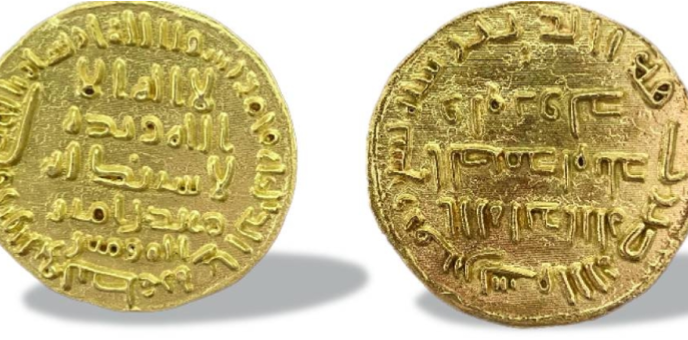
The six replicas include the Ka’aba Key from the Mamluk period, the Planispheric Astrolabe from the 10th-century Abbasid era, a Mihrab Tile from Ilkhanid Iran, the Umayyad Dinar Gold Coin, a tray inspired by Al-Andalus, and a Mamluk Incense Burner. Each artefact was selected for its historical importance and the technical challenge of replicating it accurately.
“Authenticity was critical,” al-Saegh said. “We used high-resolution digital reconstruction to preserve inscriptions, proportions, and details. Engineering adjustments were done internally to maintain strength across resin, brass, and ceramic formats.”

Vectorize co-founder and CEO Farid Mahfouz explained that the team worked closely with MIA specialists, including Susan Parker-Leavy, Marc Pelletreau, Soumeya Menber, and Sawsan Mohdamin Sallam, to ensure museum standards were met.

Mahfouz added that the process gave new insights into the artefacts. “Reconstructing objects like the astrolabe or Ka’aba Key reveals the precision and craftsmanship of centuries ago. This project is both about replication and discovery.”
The replicas will support educational workshops, public exhibitions, and hands-on learning. Mahfouz said the biggest technical challenge was translating the artefacts into materials like resin, brass, and ceramic while keeping fine details intact. Dual casting with resin and wax helped achieve precision and quality.

“This project sets a new benchmark for museums in Qatar, Saudi Arabia, and the Middle East,” Mahfouz said. “Hybrid advanced fabrication can preserve heritage, increase access, and maintain museum standards.”
Source: Gulf Times

Leave a Reply